
A Guide to Chinese Watch Movements: What Do You Need to Know?
Chinese movements are often misunderstood, but they do play a significant role. Are they hidden treasures or compromise products? Chinese watch movements, with their advantages of affordability, performance improvement, and increased complexity, have become an important force in the global watch industry. They offer practical choices for watch enthusiasts and brands seeking cost-effective and reliable mechanical devices.

Table of Contents
The history of Chinese watch movement
In 1950, the first batch of state-owned watch factories (mainly using Swiss and Soviet movements) emerged in Tianjin – from the 1980s to the 1990s, the quartz revolution impacted the global mechanical watch market, and Chinese movements began to shift to quartz, with domestic Mingzhu quartz movements serving as the representative to gradually occupy the market – from 2000 to 2010, Chinese movements began to break through the high-end market and independently developed mechanical movements (represented by the Sea gull ST19 movement ) – since 2020 to the present,Chinese movements have gained international market recognition (such as the Sea gull “double tourbillon movement”).

Cities such as Shanghai, Tianjin (the birthplace of Seagull watches), and Beijing established state-owned watch factories. The initial goal was to achieve self-sufficiency – to produce watches for domestic consumers. The early movements were often based on Swiss designs or Soviet technology, simple yet functional. I have seen some of these old watches; they have a unique, rugged charm. Over the years, these movements played a role in China. The real transformation began when China opened up to the global economy. This brought contact with international standards, more advanced technologies, and huge market opportunities.
As pointed out, their development process was long. They started as basic, practical components and gradually evolved. Factories began to invest in more advanced machinery and equipment, quality control processes were improved, and designs became bolder. They not only learned to make simple three-hand movements but also mastered the production of automatic winding systems, chronograph (such as the famous Seagull ST19, based on the Venus movement), and even extremely complex mechanisms like tourbillons and minute repeaters. This development process was not always smooth; indeed, some smaller, less rigorous producers damaged their reputations due to unstable product quality.
However, the larger, more reputable manufacturers have been committed to improvement, making Chinese movements strong competitors that offer both affordability and increasingly reliable performance..
The advantage of Chinese watch movement
Why do many watch brands and manufacturers choose Chinese movements? The advantages are not just about the low price. It also offers a highly attractive overall value, reliability and continuously improving craftsmanship. The main advantages of Chinese watch movements lie in their extremely high cost performance, significant improvement in reliability, sufficient supply guarantee, and the increasing variety and complexity of movements (including automatic movements ,chronograph, a nd even tourbillon movements), all at an affordable price.

China’s development in the global watch industry is not an accidental phenomenon; its success is attributed to a series of highly attractive advantages that enable it to attract a wide range of user groups, from enthusiasts to well-known brands. At Watchessy, these points are often brought up when discussing movement choices with our clients. First and perhaps most obviously, there is “cost-effectiveness”. Movements produced in China are usually much cheaper than their Swiss or Japan counterparts, especially for mechanical movements. This allows brands to offer mechanical watches at more affordable prices. Secondly, “reliability has significantly improved”. Although early opinions may have been mixed, many modern Chinese movements, especially those from well-known Chinese movement manufacturers, have stable and reliable performance.
As this insight emphasizes, “reliable performance” is a key feature. Thirdly, there are advantages in terms of “supply and scale”. Chinese factories can produce movements in large quantities, ensuring a stable supply for brands of all sizes. Fourthly, there is the characteristic of being “increasingly complex and diverse”.
Now you can find Chinese movements that go far beyond simple timekeeping functions. The appearance of automatic mechanical movements isno longer rare, and features such as chronograph (like the Seagull ST19 series), GMTfunctions, power reserve indicators, and even tourbillon mechanisms are also common, and these configurations often come at a fraction of the price of their Swiss counterparts . The phenomenon of “increasing complexity” mentioned in this insight is crucial – it means that Chinese movements are no longer limited to basic watches. They offer a “flexible and feasible solution”, allowing brands to innovate and add functions without significantly raising the retail price. This combination makes them a very powerful choice in today’s market.
Chinese watch movement manufacturers you should know
Leading Chinese movement manufacturers include Seagull (Tianjin Watch Factory), Shanghai Watch Factory, Hangzhou Watch Company, Peacock (Liaoning Watch Factory), and some newer specialized enterprises. Each of these companies has made significant contributions to the diversity and output of movements.
Seagull (Tianjin Watch Factory) is undoubtedly one of the most renowned in the international market. It is one of the world’s largest manufacturers of mechanical movements and is well-known for its chronographs (such as the ST19 series based on the Swiss Venus 175 case they acquired) and various automatic movements (including tourbillon movements). For many niche brands seeking cost-effective complications, it is an ideal partner.

Shanghai Watch Factory is another brand with a long history and rich traditions. They produce a variety of automatic and manual winding movements and are renowned for some classic designs and their focus on enhancing quality. They also offer some more high-end and complex movements, often featuring unique Chinese design styles.

Hangzhou Watch Company is a major player, manufacturing a large number of automatic movements widely used in economy mechanical watches. Their models, such as the 2000 series and 3000 series, are regarded as reliable mainstay products and are alternatives to certain Japanese movements.

Peacock (Liaoning Watch Factory) is another significant manufacturer, particularly renowned for its tourbillon movements and other complex calibers. They are known for producing some of the more intricate and highly finished Chinese movements.

In addition, there is Fujian Ruitai, a globally leading Chinese quartz movement supplier, with an annual output exceeding 1 billion pieces.
The best Chinese watch movement
Looking for reliable and highly regarded products from China? Although the term “best” is subjective, certain Chinese brands have earned a high reputation for their outstanding performance, features, and cost-effectiveness. Popular and highly regarded Chinese brand sports watches include the “Seagull ST19 series ” (mechanical chronograph), “Seagull ST2130” (copying the Audemars Piguet 2824 movement), “Hangzhou 6xxx series ” (automatic mechanical watches), and various “Peacock” series tourbillon models. The “best” evaluation depends on the desired functions, price range, and specific uses.
It is indeed quite challenging to determine exactly what the “best” Chinese movement is, as it largely depends on the criteria you value – complexity, reliability of basic automatic movements, or cost-effectiveness? However, some movements undoubtedly stand out in their respective categories due to their outstanding performance. Based on my experience at Watchessy and observations of market trends, there are a few movements that are particularly notable.
The Seagull ST19 series (such as ST1901, ST1902) is almost a legend in the affordable chronograph field. It is a hand-wound, column-wheel chronograph movement based on the Swiss Venus 175 technology, which Seagull purchased. It offers a genuine mechanical chronograph experience at an extremely high cost-performance ratio and is deeply loved by many small brands and enthusiasts.

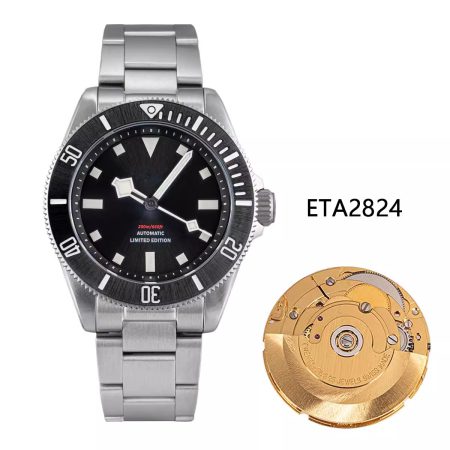
For reliable automatic three-hand movements, the Seagull ST2130 (a clone of the ETA 2824-2), Hangzhou 6300 (also a clone of the ETA 2824-2 or Sellita SW200), or Hangzhou 6460 (a clone of the ETA 2836-2 with date and day display) are widely used and are generally regarded as reliable mainstay movements. Their specifications are similar to those of their Swiss counterparts, but at a much lower cost. If you are looking for more complex mechanical devices, the “Peacock” series is renowned for its tourbillon mechanism. Although its price is still higher than that of the basic models, it offers consumers who want to experience the complex functions of high-end watchmaking a relatively accessible option. Seagull also produces a series of tourbillon movements (such as the ST8000 series), which are highly praised for their price range.
The “best” choice actually depends on the specific requirements of the watch project. For a simple and reliable automatic movement, products from Hangzhou or standard Seagull automatic movements may be perfect. For chronographs with a limited budget, the ST19 is often an unrivaled option. The expanding product range ensures that there is likely to be a Chinese movement that can offer a “flexible and feasible solution”, just as your insight perfectly describes.
Chinese watch movement Vs Swiss Vs Japan
Swiss movements are at the forefront in terms of reputation, precision and perceived quality by users, and thus command higher prices. Japan movements (such as Seiko and Miyota) offer excellent reliability and value for money, and are priced in the middle range. Chinese movements are the most affordable, and their quality and complexity are rapidly improving, especially in terms of value for money for entry-level to mid-range mechanical watches.
When evaluating watch movements , people usually take the “big three” origins -Swiss, Japan and China – as the objects of comparison. Each origin has occupied a unique position in the market. At Watchessy, we often help our clients understand these differences so as to find the most suitable products for their brands in terms of target audience and price positioning.

As this insight accurately points out, Chinese-made movements have become “strong competitors”, especially for those “seeking economical options or brand enthusiasts who value cost-effectiveness”. Swiss-made movements still hold the throne of luxury and supreme reputation. Japan movements , such as those from Miyota or Seiko, are excellent due to their robust reliability and value, often favored by many smaller brands.
Chinese movements are the most affordable, particularly for mechanical complications like chronograph or tourbillons. Although top-notch craftsmanship and brand reputation may still belong to Swiss brands, the gap in functional reliability for similar basic movements (such as ETA 2824 clones) has significantly narrowed. The choice often depends on balancing brand perception, required functions, and the key retail price target of the watch.


Leave a Reply
Want to join the discussion?Feel free to contribute!