Miyota vs. Ronda: Which Watch Movement is Right for You?
The Japanese brand Miyota provides excellent, reliable, and affordable movements. The Swiss brand Ronda offers high-quality “Swiss Made
” models as well as more cost-effective “Swiss Parts” options. Ronda movements are quite similar to Miyota in terms of price and quality. So your choice depends on whether you value the Japanese reputation for good value or the Swiss reputation for quality, as well as your budget.
As a watchmaker
, I come into contact with various movements every day: Japanese Miyota
, Seiko and Swiss Ronda are all excellent choices that we often recommend to our clients when customizing watch projects
. They power millions of watches worldwide, but each has its own advantages and slightly different applications. Understanding the subtle differences between them can help you select the perfect movement for your watch brand positioning, saving costs while highlighting your brand’s characteristics.
Let’s take a closer look at their individual features.
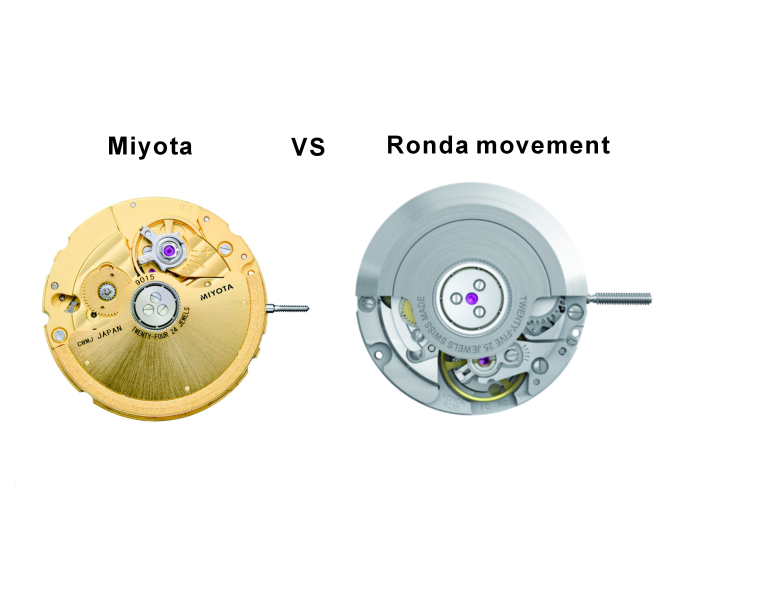
Miyota VS Ronda
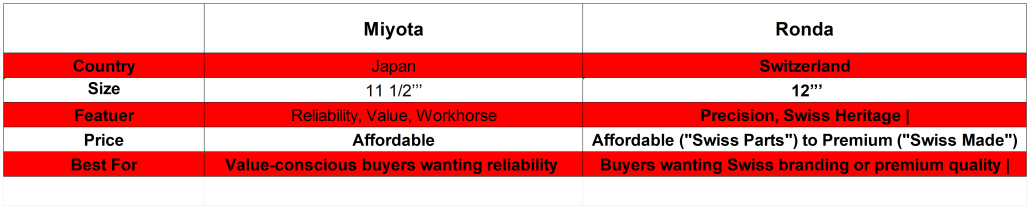
The main difference between Miyota and Ronda is their origin. Miyota is a Japanese company owned by Citizen, famous for producing millions of reliable and affordable movements. Ronda is a Swiss company with a reputation for precision and quality. However, Ronda has two main product lines. “Swiss Made” movements are manufactured and assembled in Switzerland and carry a premium price. “Swiss Parts” movements use components made in Switzerland but are assembled in Asia. These “Swiss Parts” movements are very close in price and performance to Miyota’s offerings. For many quartz watches
, the choice between a Miyota and a “Swiss Parts” Ronda comes down to brand preference, as both are excellent.
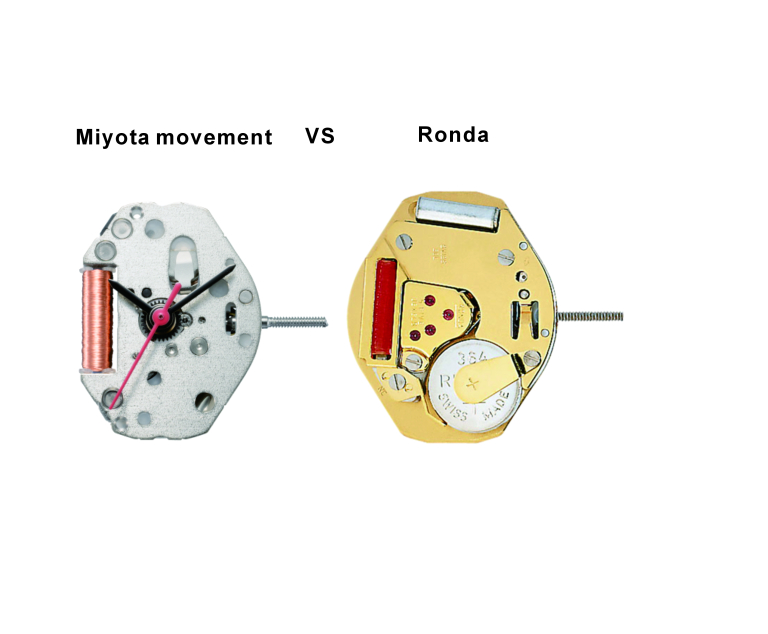
When comparing the Miyota 2035 quartz movement with the Ronda 763 movement, both are ordinary three-hand movements without a calendar. However, the 763 movement is thinner, has 5 jewels, and has a smaller error (-10/+20 sec/month). But the price of the 763 movement is about three times that of the 2035. Therefore, whether to choose Miyota or Ronda movement depends on the brand positioning and budget.
When comparing the Miyota 2035 quartz movement with the Ronda 763 movement, both are ordinary three-hand movements without a calendar. However, the 763 movement is thinner, has 5 jewels, and has a smaller error (-10/+20 sec/month). But the price of the 763 movement is about three times that of the 2035. Therefore, whether to choose Miyota or Ronda movement depends on the brand positioning and budget.
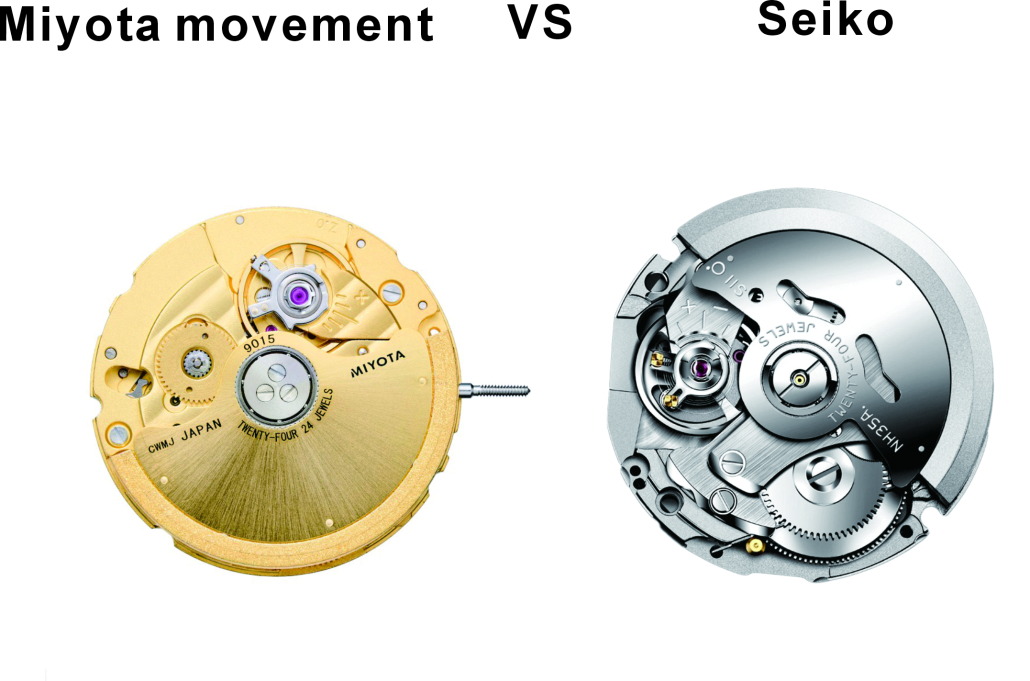
Miyota movement vs Seiko
You see that both Miyota and Seiko are top Japanese brands. It is hard to know which one is the better choice for your watch.
Seiko and Miyota both produce reliable and affordable Japan movements
. The popular Seiko NH35
often includes better features like hacking. However, the Miyota 8215
is a strong budget choice, while the Miyota 9015
offers a slimmer, more premium alternative.
In my experience, you can’t go wrong with either Miyota or Seiko. They are the two giants of Japanese movement manufacturing. Let’s compare two of their most popular automatic movements. The Seiko NH35 is often favored because it features hacking (the second hand stops when you set the time) and bi-directional winding, which makes it feel a bit more refined and quiet. The Miyota 8215 is an older but incredibly reliable design that is usually cheaper. Its main drawbacks are a lack of hacking and a “rotor wobble” that you can sometimes feel.
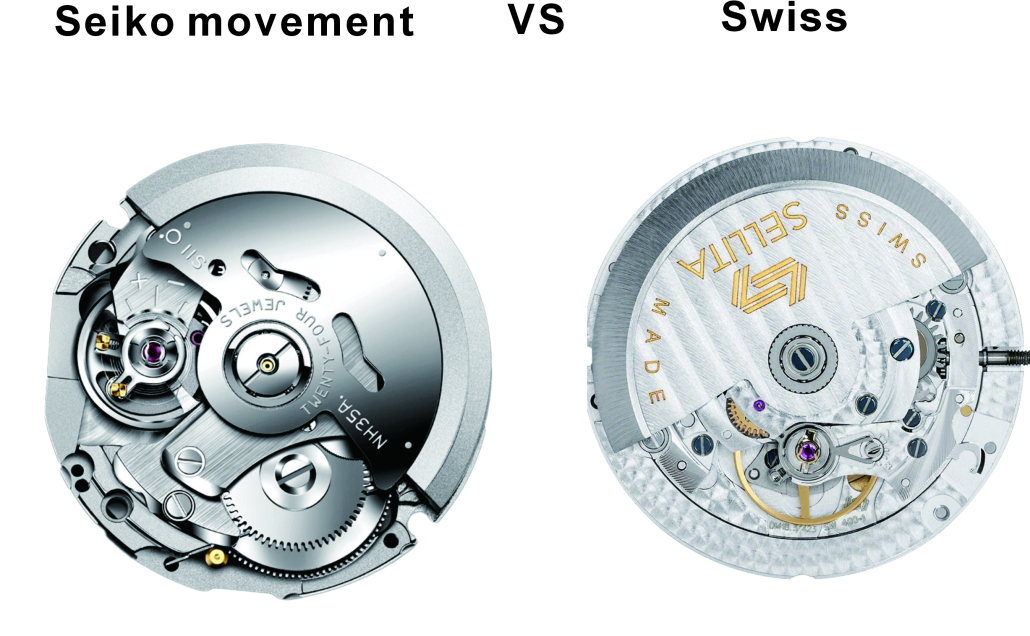
Seiko movement vs Swiss
Choose a Seiko movement for outstanding reliability, great value, and easy maintenance. Go for a Swiss movement
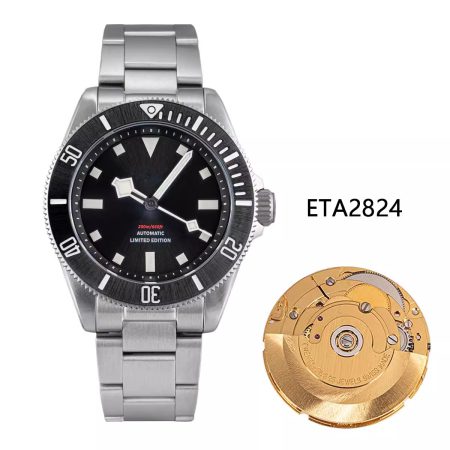
(like ETA, Sellita, or Ronda) if you prioritize heritage, refined craftsmanship, and the prestige of the “Swiss Made” label.
This is a classic debate in the watch world. If you value reliability and affordability above all else, a Seiko movement is an excellent choice. Movements like the Seiko NH35, NH36
, and NH34 are true workhorses. They are built to last, perform consistently, and are relatively easy and inexpensive for any watchmaker to service. This is why we use them in many of our custom-designed watches.
On the other hand, Swiss movements from brands like ETA, Sellita, and Ronda are all about craftsmanship and heritage. They often feature more intricate decoration and finishing, and they carry the prestigious “Swiss Made” designation. This label comes with a higher price tag, but for many collectors and enthusiasts, the tradition and perceived quality are worth it. Your choice really depends on what you value more: everyday practicality or luxurious tradition.
Conclusion
Miyota, Ronda, and Seiko all offer excellent, reliable movements. The best choice depends on your priorities: Japanese value, Swiss prestige, or a unique balance of performance and innovation.
Giving up on your dream of starting a watch brand?
Are you still going to put up with bad watch manufacturers?
One more watch supplier, one more opportunity for you!
Give me a chance, and you'll enjoy better service and
products




Leave a Reply
Want to join the discussion?Feel free to contribute!