
What is mother-of-pearl on watches
A watch dial shimmers with shifting colors. You wonder what mother-of-pearl is and if its natural, delicate beauty is strong enough for a daily watch. Mother-of-pearl is a natural, iridescent material taken from the inner lining of shells, like oysters. Its unique, shimmering play of color makes each watch dial a one-of-a-kind piece, prized for its natural beauty and luminous depth.
As a watch manufacturer , I have handled countless mother-of-pearl dials. They arrive as thin, delicate sheets, and each one is completely unique. The way they catch the light is something you cannot replicate artificially. Many of our clients ask about it, often confusing it with other shell types or wondering if it is real. Let’s break down exactly what it is and how it compares to other materials you might see on a watch.

mother of pearl dial meaning
You know mother-of-pearl comes from a shell. But how does this natural material create the deep, shifting colors you see on a luxury watch dial?
A mother-of-pearl dial means your watch face is made from the inner, iridescent layer of a mollusk’s shell. This natural material, called nacre, creates an ever-changing display of color and light, making each dial unique.
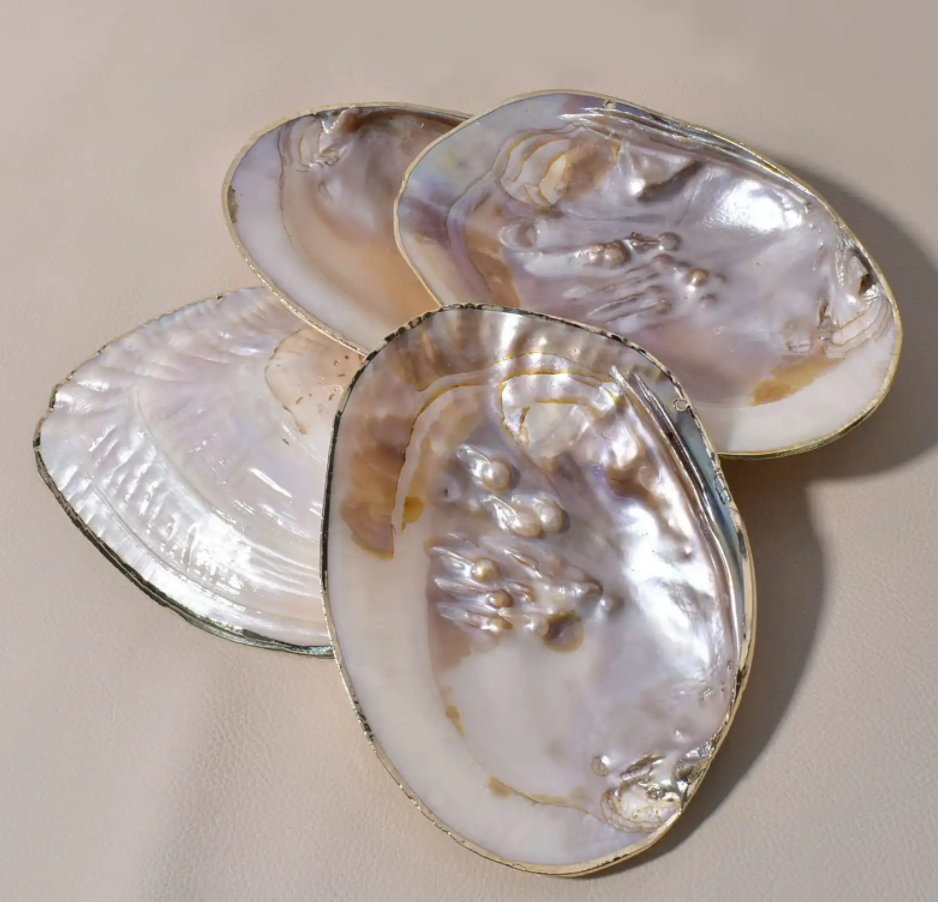
Mother-of-pearl, also called nacre, is a true wonder of nature. It is the same substance that forms pearls. The mollusk creates this incredibly strong material to protect the inside of its shell from parasites and damage. It is a composite material made of tiny hexagonal platelets of calcium carbonate arranged in layers. This layered structure is the secret to its beauty. When light hits the dial, it passes through these different layers and reflects at various angles. This interference and diffraction of light waves create the shimmering, rainbow-like effect known as iridescence. This is why the dial seems to change color as you move your wrist.
For us in the factory, working with it is a delicate process. We receive it in very thin sheets, which we have to carefully cut and shape. Because it is a natural material, it can be fragile, and applying the hour markers requires great precision.
mother of pearl vs abalone dial
You see two shell dials with incredible shimmer. One is a classic white, while the other swirls with deep blues and greens. You wonder if they are just different colors.
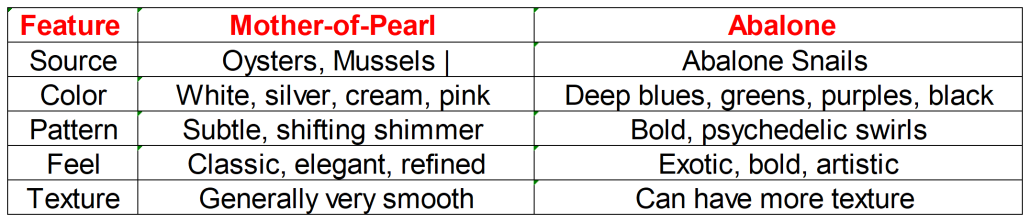
No, they are different. Mother-of-pearl typically has a white, silver, or cream-colored luster. Abalone comes from a different shell and features dramatic, psychedelic swirls of deep blue, green, and purple, offering a bolder and more colorful look.
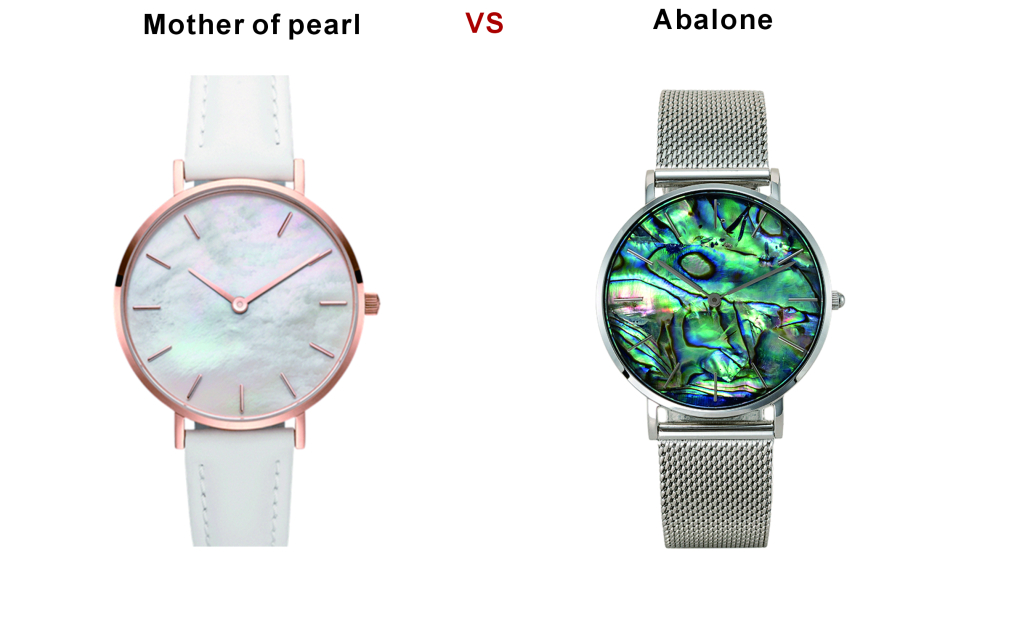
While both are types of shell dials, their visual impact is completely different. The choice between them comes down to the style the watch brand wants to achieve. Mother-of-pearl is all about subtle elegance. Its soft, milky sheen is often used in dress watches and ladies’ watches to add a touch of classic, refined luxury. Abalone is the bold, exotic cousin. Its deep, swirling colors are almost psychedelic and demand attention. We see abalone used more in unique dive watches or artistic pieces where the goal is to make a strong statement. Its wild patterns can evoke the .
mother of pearl vs fake pearl dial
You found an inexpensive watch with a ‘pearl’ dial. It looks okay, but it lacks depth and shimmer. You worry it might just be a cheap, printed imitation.
A real mother-of-pearl dial has a unique, deep luster that shifts as you move it in the light; no two pieces are identical. A fake dial is often a printed pattern that looks flat, has a repeating design, and lacks true iridescence.
Spotting a fake often comes down to observing how it plays with light.
Look for Depth and Uniqueness Real mother-of-pearl has physical layers. The light seems to come from *within* the material, not just reflect off the surface. Because it is natural, every single dial will have a slightly different pattern of shimmer and color. It’s like a fingerprint; no two are exactly the same. A fake dial is just a picture printed on a flat surface.
Test it with Light This is the best test. Hold the watch and tilt it back and forth under a light source. A real mother-of-pearl dial will come alive, with colors and patterns shifting and changing with every angle. A fake, printed dial will look mostly the same no matter how you tilt it. The reflection might change, but the underlying pattern will not. On very cheap alloy watches, a printed “pearl effect” dial is common to keep costs down.
Mother of pearl vs shell dial
The terms ‘mother-of-pearl’ and ‘shell dial’ seem interchangeable. You are not sure if they mean the same thing, or if one is a lower-quality version of the other. Not always. While mother-of-pearl is the most famous type of shell dial, other shells are used. For example, river shell has a shine but often looks more like matte or frosted ceramic with a more uniform, less iridescent color.
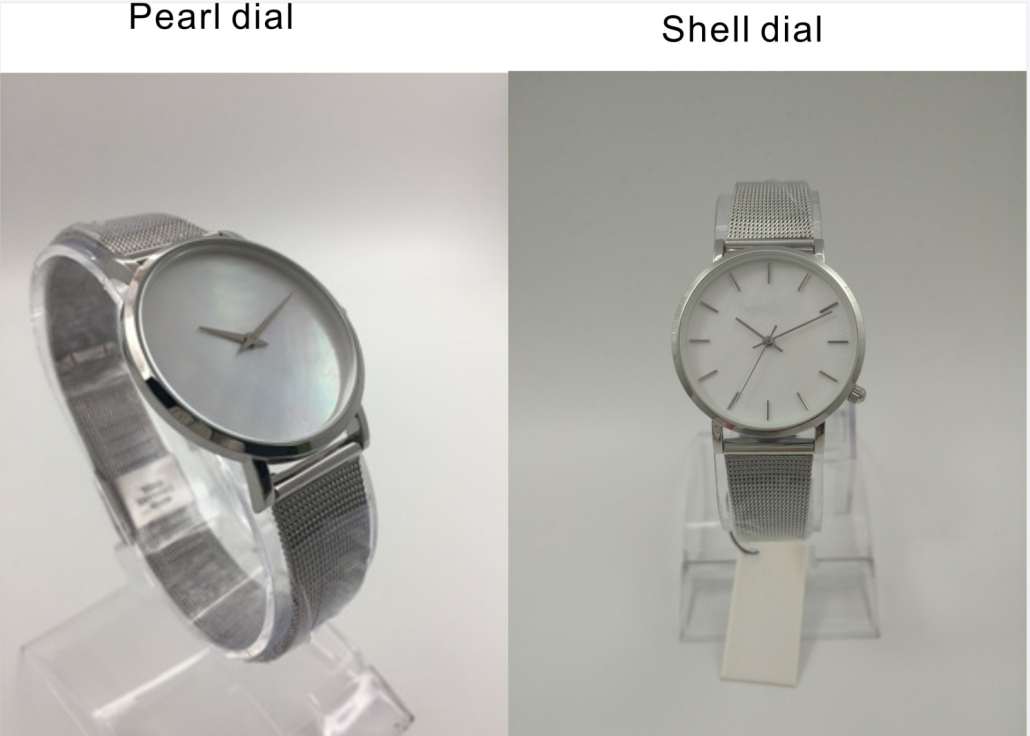
It helps to think of “shell dial” as a general category, with mother-of-pearl being the most popular member. But other materials fit into this family. One common alternative we sometimes see is river shell. Unlike the dynamic shimmer of mother-of-pearl, river shell has a much quieter beauty. Its surface has a lustrous sheen, but it is more opaque and uniform, almost like polished, pearlescent ceramic. It gives a soft glow rather than a vibrant flash of color.
A watch brand might choose river shell for a minimalist design where the dramatic iridescence of mother-of-pearl would be too distracting. It provides a touch of natural texture and elegance without being the center of attention. So, while mother-of-pearl is a type of shell dial, not all shell dials are mother-of-pearl.
Why is mother of pearl cheap
Mother-of-pearl has a unique beauty like a gemstone. You expect it to be expensive, but you see it on affordable watches. This makes you question its true value.
Mother-of-pearl is relatively inexpensive because the oysters and mollusks it comes from can be farmed in massive quantities. Its abundant and sustainable supply keeps the raw material cost much lower than rare gemstones.
What is mother of pearl on watch
Mother-of-pearl offers the unique beauty of a natural gem without the high cost. Its shimmer makes any watch special, providing a touch of affordable, one-of-a-kind luxury.
Related product


Related post
Manual vs automatic watch:what’s the difference
In the watchmaking world, few topics can stir up as much passion and debate as the differences between manual vs automatic watches. The main
mens vs womens watch:what’s the difference
You’re shopping for a watch and see the strict “men’s” and “women’s” categories. This makes you feel limited, wondering if you’re missing out on
Brass, Bronze, or Stainless Steel: Which Watch Material is Best for You?
Struggling to choose between watch materials? The classic shine of steel, warm tone of brass, or unique aging of bronze can be confusing, making
Is the Seagull ST2130 a Good Watch Movement?
You’re looking for an affordable automatic watch and hear about the Seagull ST2130 . But it’s Chinese-made, and you worry it might just be
How to design a watch
In today’s world, watches are more than just a tool to tell time – they have become a fashion accessory and a statement of personal
Watch Movement Manufacturers
A watch movement (also known as a “caliber”) is the engine of a watch that acts as the powerhouse to make the watch and its
Swiss movement VS. Japanese movement
Swiss movement vs Japanese movement Watches are not just timepieces but also a reflection of one’s style, taste, and personality. Among the various watch components that


Leave a Reply
Want to join the discussion?Feel free to contribute!